
July 1, 2025
 I travel often, so I'm typically prepared with all the documents, clothing, and gadgets I need. But one item has become increasingly important in recent years — a portable charger.
Few things are worse than being a long way from your hotel and seeing your phone battery drop below 20%. You turn down your screen brightness and stop scrolling through social media because you know if your phone dies, you might die as well. OK, that's a little extreme, but it can feel that way.
June 14, 2025
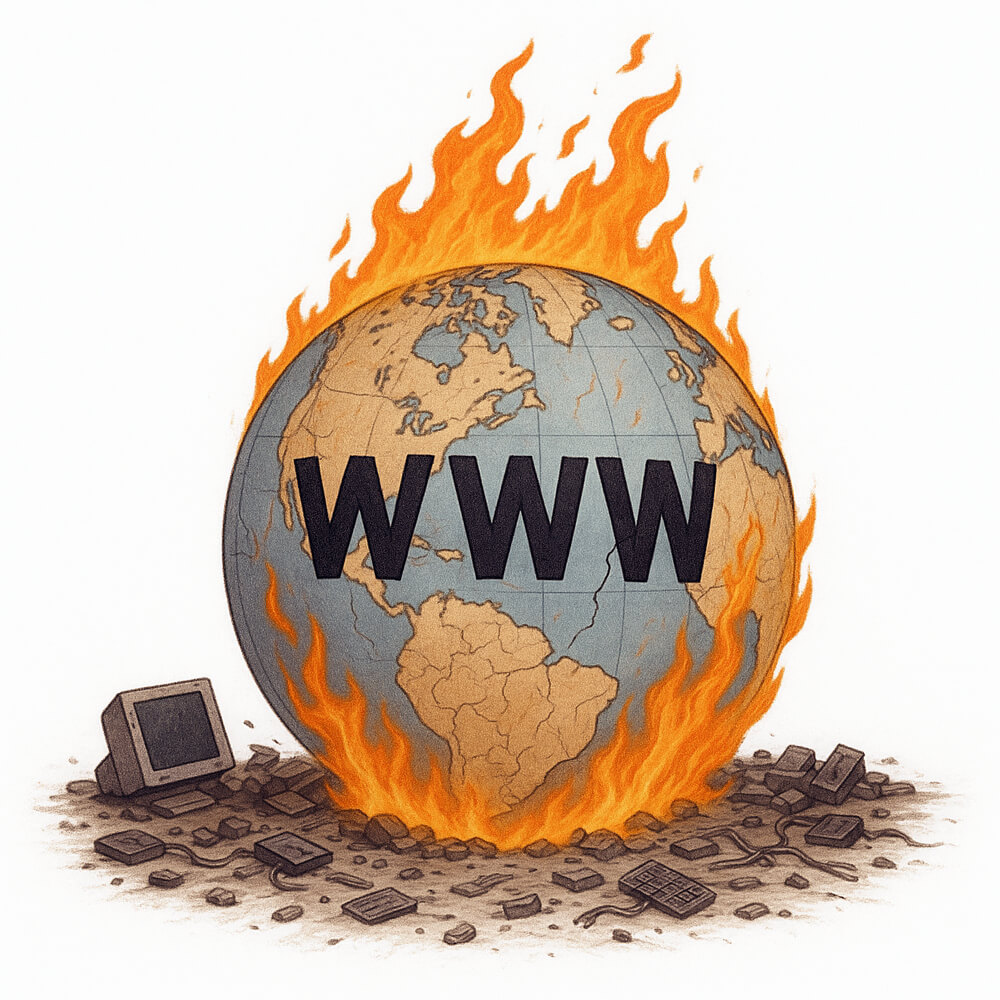 It was fun while it lasted, but the web we've known for the past 25 years is coming to an end.
The decline of the world wide web began about ten years ago when Google introduced featured snippets — those prominent answers that appear above the search results. While helpful for searchers, they had the opposite effect on webmasters. Since users could often get the information they needed directly from the featured snippet, they didn't click through to the corresponding web page. These "position zero" snippets also pushed down traditional results on the page, meaning fewer clicks to websites.
June 1, 2025
 Last month, I made a case for using a wired connection instead of a wireless one. But with Wi-Fi speeds rivaling their wired counterparts, a wireless connection could be faster than wired — especially if you have an old Ethernet cable.
Whenever you connect a device via Ethernet, make sure to look at the cable to verify the transfer speed. The Ethernet specification, which is usually printed on it, should be at least "Cat 5e," or better yet, "Cat6" or greater.
May 1, 2025
 In a world of wireless signals, wired connections (like Ethernet) are often overlooked. But when portability isn't an issue, a wired connection is best.
Wireless transmissions are susceptible to interference from both physical barriers and other signals. An Ethernet cable ensures a consistent connection with minimal signal fluctuations. It's especially helpful for real-time Internet activities, such as video conferencing, gaming, and streaming.
April 1, 2025
 If you're having trouble saving files to the cloud today, you're not the only one. Users across the globe are reporting "Cloud Storage Full" errors before reaching their storage quotas. Services like Dropbox, iCloud, and Google Drive still allow people to download data, but uploading files is no longer possible.
The worldwide phenomenon can only mean one thing — the cloud has reached its maximum storage capacity. Computer scientists, who for years told us the cloud provided limitless storage, are miffed at the sudden limitation. Analysts, consultants, and other "experts" are also surprised.
April 1, 2025
In honor of World Backup Day (March 31), I recommend you review your backup strategy. And I'm not just referring to your computer. It's time to check every digital device you own and make sure you're backing up your data reliably.
For example, you might have an effective backup strategy for your home computer, but are you sure your smartphone and tablet are getting backed up automatically? What about your smartwatch? If your devices aren't syncing in the cloud, you might permanently lose data such as contacts, messages, photos, and videos if you lose or damage your device.
March 14, 2025
 If someone asks for your URL, they want the web address of your profile or home page. If it's a personal request, they may wish to access your social media profile, such as your Facebook or LinkedIn page. If it's a business request, they most likely want the domain name of your organization's website, such as https://pc.net.
When responding to a URL request, you can send the person a link (typically beginning with https://), which they can click to visit your page. Some email clients and social media platforms automatically convert URLs to clickable links. If you want to make sure an email link is clickable, you can:

