 Home
Home Share
ShareFrom Browsing to Searching to Asking
September 18, 2026 — by Per Christensson
 You're probably reading this on a web browser. But do you remember actually "browsing" the web? Most people using the Internet today never had to browse. They've been typing queries into search engines for as long as they can remember. And next generation won't even remember searching. They'll only have to ask.
The progression makes sense: Searching is easier than browsing, and asking is easier than searching. Search engines did the browsing for us, and now AI engines search on our behalf. We used to be impressed by how quickly Google could return a list of sites based on the keywords we entered. Now, that’s too much work. We expect the results to be distilled into an answer so we don’t have to sort through them.
Sorry, websites (like PC.net) — people don't want to visit you anymore.
A Trip Down Cyberspace Lane
When the web launched in the 1990s, people discovered websites by visiting URLs printed on business cards or displayed on television ads. When you visited a website, you might click an external hyperlink, which would direct you to a different website, and the adventure would continue. The process was fun, but not very efficient. Eventually, directories like the Yahoo! Directory and the DMOZ Open Directory aggregated and organized websites, making it easier for users to find what they needed.
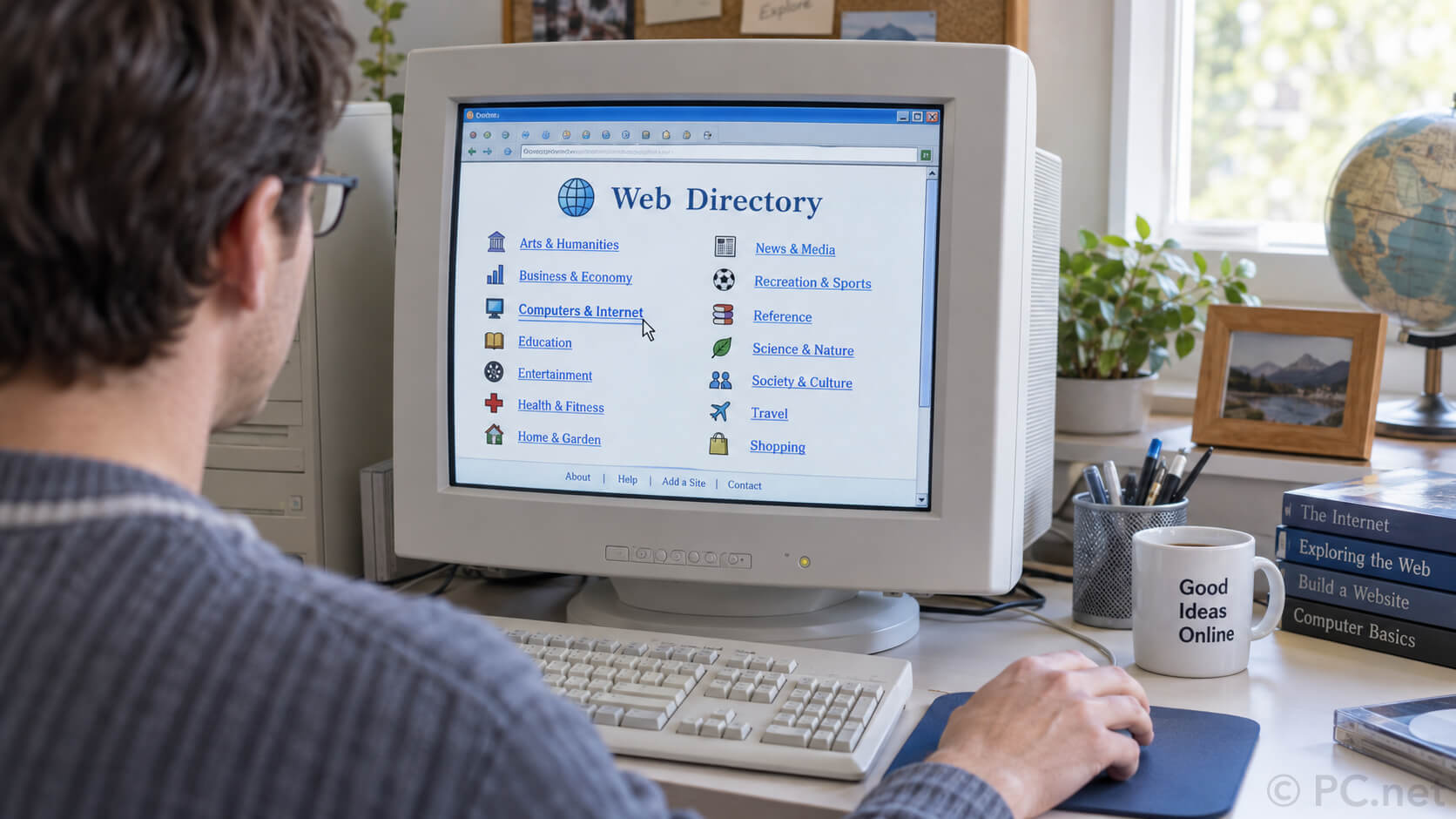
But web directories (or "portals") were incomplete and took a long time to navigate. Search engines like Excite, Infoseek, and Altavista let users search terms to find related sites. But to get quality results, you had to be very specific with what you typed in the search box. If you misspelled a word or didn't enter the exact word that was on a page, you wouldn't get the results you wanted. Skilled searchers used operators like AND and NOT to fine-tune their searches. Then Google came along and provided "smarter" results, which were more targeted to what users expected to see. The solution was so effective, it lasted for over two decades.

Today, generative AI has taken the convenience of finding information to a new level. We don't even think about entering the right keywords or operators in the search box. We simply type what we are thinking, even as a stream of consciousness, and the artificial intelligence figures out what we mean. You might think this makes us lazier, but it actually makes us more productive. We don't even need to search for what we are looking for, and we certainly don't need to browse for it. We ask for what we want, and a few seconds — or milliseconds — later, we get it.

What’s Next?
Just as we're getting accustomed to asking, the next step has already arrived: Telling.
AI agents don't just respond to questions; they perform tasks. We tell them to write email drafts, create presentations, generate images, and code applications. In short, we tell them to do our work for us.
Perhaps the next phase will be telling robots what to do. Maybe I'll be writing about that in 20 years. Or maybe I'll tell my robot to do it for me.
 April 1st
